
Fitness nutrition in Livingston, TX starts with a busy gym goers meal plan built on healthy meal prep ideas: lean proteins, whole grains, and vegetables cooked in bulk. Vickery’s Sweat Shop has been recognized as ‘Best Gym’ multiple times.
Key Takeaways
- Meal prep removes the daily friction of deciding what to eat for gym goers.
- Pre-portioned meals eliminate the awkwardness of pulling out a food scale at every meal.
- Batch-weighing ingredients once during a prep session saves time and removes social discomfort.
- A weekly meal prep menu starts with a clear fitness goal and a structured plan.
Why should gym goers meal prep?
Meal prep removes the daily friction of deciding what to eat. Fitness success depends on consistency, and preparing meals in advance is one of the simplest ways to maintain that consistency. Without a plan, members skip meals, overeat, or turn to expensive takeout that derails progress.
The financial impact compounds quickly. Planning ahead allows bulk purchasing, minimizes food waste, and makes smarter use of low-cost ingredients. A fitness meal plan stays on track while the budget remains intact. For busy working professionals and parents in Livingston, this dual benefit eliminates two major obstacles at once.
How does meal prep support nutrition and weight management?
Pre-portioned meals remove guesswork from daily eating. Members who prepare food in advance control calorie intake and macronutrient balance without constant measuring or tracking. This structured approach aligns eating habits directly with fitness goals.
Vickery’s Sweat Shop strengthens this process through expert guidance. A master’s-trained nutritionist leads evidence-based coaching and a structured nutrition and weight management program at the facility. Members combine practical meal preparation skills with professional oversight, creating a system that sustains results long after the initial motivation fades.
What happens when gym goers skip meal prep?
Missed meals lead to poor decisions. Hunger drives members toward convenience foods high in calories and low in nutritional value. The cost of repeated takeout purchases adds up, while progress toward strength or weight loss goals stalls. Consistency breaks, and rebuilding momentum requires more effort than maintaining it ever did.
What do you need before starting meal prep
What do you need before starting meal prep?
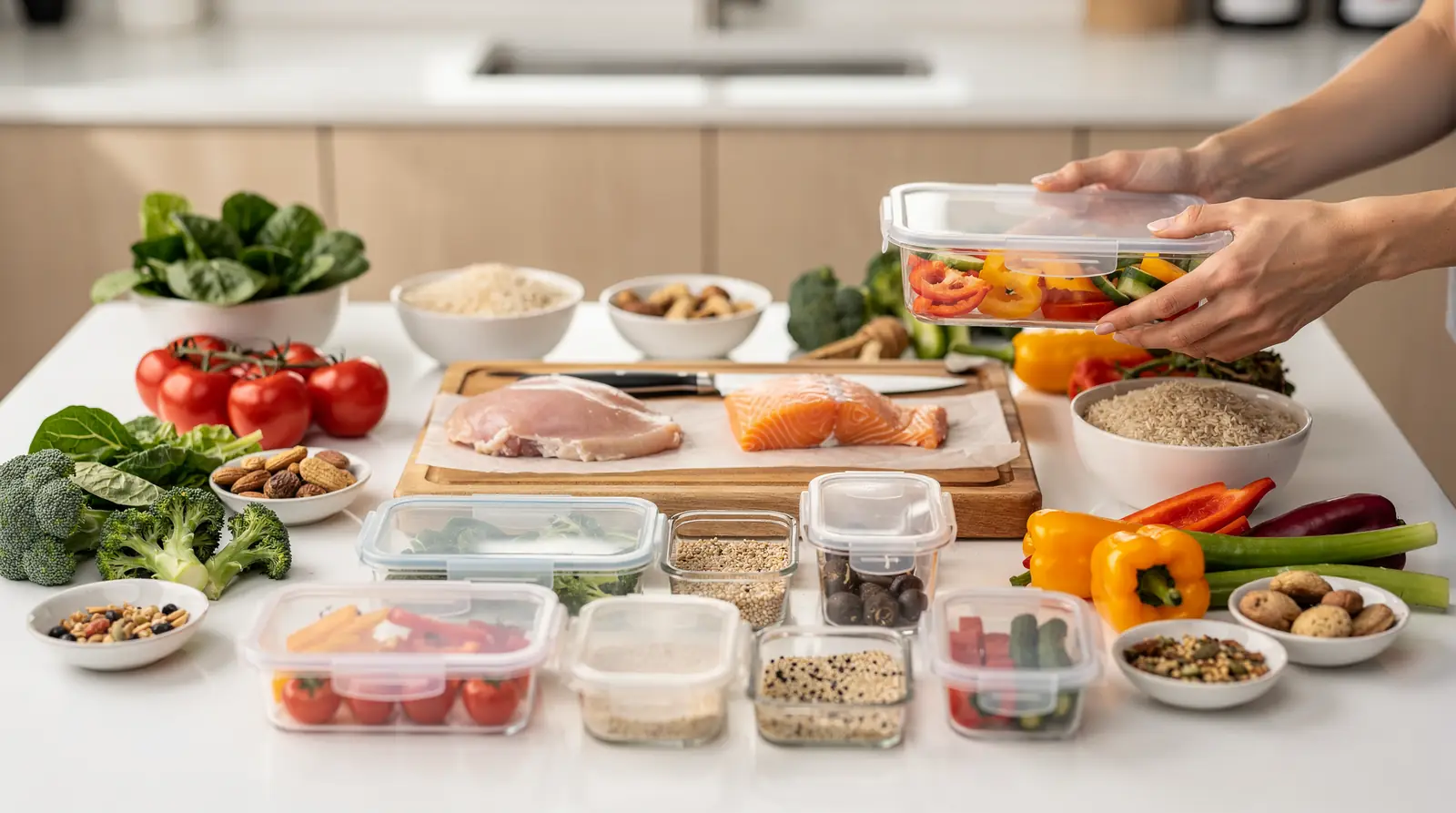
Effective meal prep begins with a clear plan for pre-portioned food. A person must fuel the body with the right amount of calories and nutrients, which requires weighing food. Without this step, nutrition and weight management goals remain guesswork rather than measurable progress.
Pulling out a food scale at every single meal becomes awkward, tiresome, and cumbersome. Pre-portioned meals eliminate that daily friction. Batch-weighing ingredients once during a prep session saves time and removes the social discomfort of measuring food at the dinner table.
How does body composition analysis improve meal prep accuracy?
A scale provides weight, but body composition data reveals what that weight actually represents. Members at Vickery’s Sweat Shop access InBody body composition analysis to guide their nutrition and weight management efforts. The analysis breaks down muscle mass, body fat percentage, and water weight, giving precise targets for calorie and macronutrient planning.
What post-workout nutrition supports meal prep goals?
Pre-portioned meals handle daily intake, yet workout windows demand faster fuel. The on-site protein shake bar and supplements at Vickery’s Sweat Shop support pre- and post-workout nutrition. A quick shake after a session bridges the gap until the next prepared meal, keeping recovery on track without derailing the day’s macro targets. For those combining meal prep with high-intensity training, DEKA training nutrition strategies offer additional guidance on hydration and carbohydrate timing.
How do you plan a weekly meal prep menu?
Smart food and nutrition and weight management planning determines whether a member gains lean muscle or stores unnecessary fat. Training alone cannot compensate for a poorly planned diet. The food on the plate powers real muscle growth. The body needs consistent fuel to recover, grow, and perform at its best.
What should a weekly meal prep menu include?
A balanced menu includes protein, complex carbohydrates, and vegetables in every meal. Members at Vickery’s Sweat Shop build menus around their specific goals, whether fat loss or muscle gain. Portion control becomes automatic when meals are prepared in advance. This consistency eliminates daily decision fatigue and keeps nutrition on track.
How many days of meals should someone prep at once?
Most members prep for three to five days at a time to maintain freshness and variety. A shorter prep window works well for those new to the routine. Longer preps suit experienced planners who freeze portions for later in the week. The key is matching the prep volume to the available time and refrigerator space.
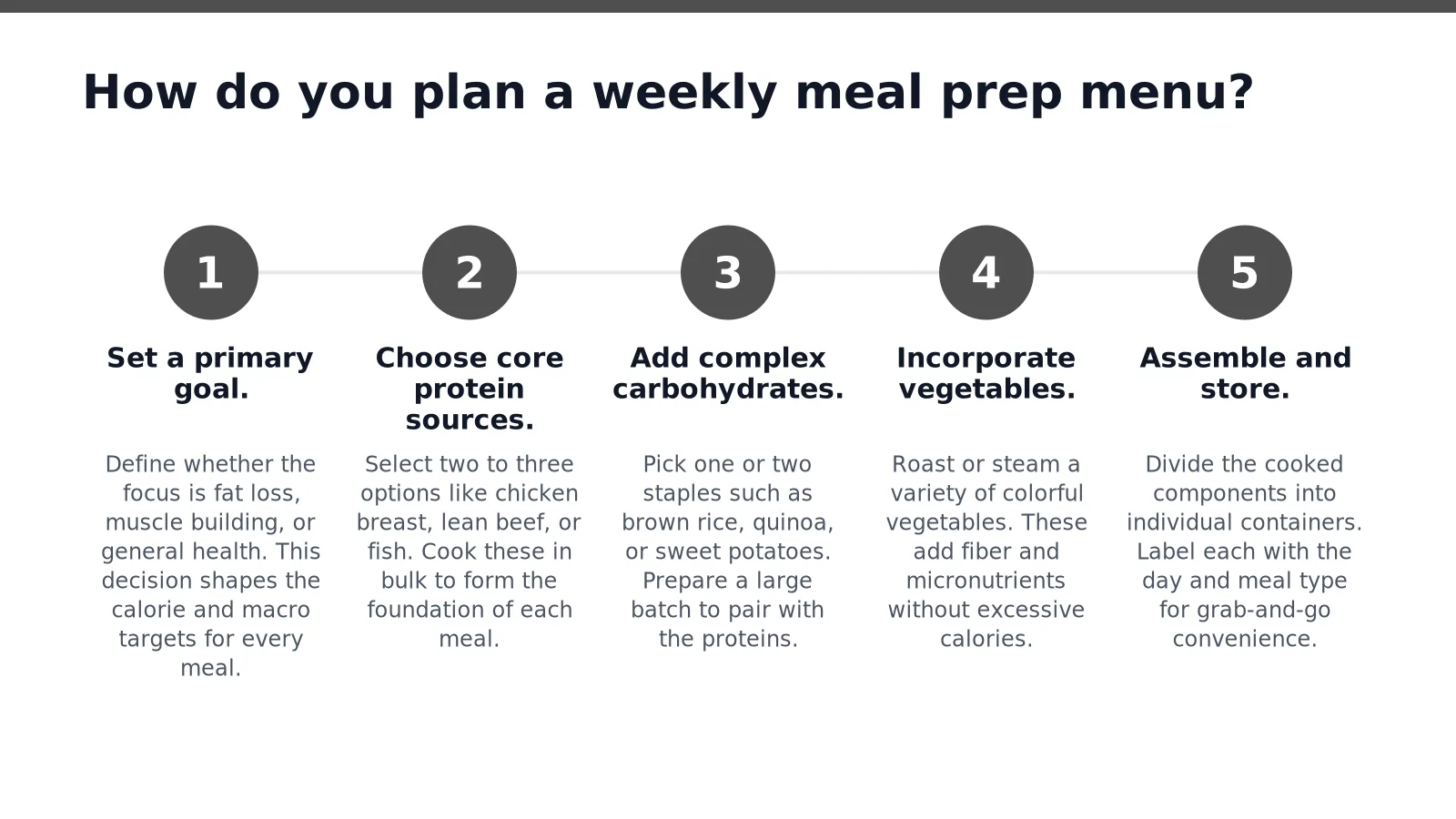
Follow these steps to build a weekly menu:
- Set a primary goal. Define whether the focus is fat loss, muscle building, or general health. This decision shapes the calorie and macro targets for every meal.
- Choose core protein sources. Select two to three options like chicken breast, lean beef, or fish. Cook these in bulk to form the foundation of each meal.
- Add complex carbohydrates. Pick one or two staples such as brown rice, quinoa, or sweet potatoes. Prepare a large batch to pair with the proteins.
- Incorporate vegetables. Roast or steam a variety of colorful vegetables. These add fiber and micronutrients without excessive calories.
- Assemble and store. Divide the cooked components into individual containers. Label each with the day and meal type for grab-and-go convenience.
Meal prep makes healthy eating effortless. With a little forward planning, a member avoids thinking about cooking for days at a time. This routine frees up mental energy and prevents last-minute food choices that derail progress.
What are easy meal prep recipes to try?
Easy meal prep recipes move beyond plain chicken breast and broccoli to deliver variety that supports muscle-building and fat-loss goals. The Meal Prep Manual organizes popular options into clear categories that simplify weekly planning. Without structured meal prep, busy professionals and parents in Livingston risk defaulting to convenience foods that derail nutrition and weight management progress.
What categories work best for meal prep beginners?
Four foundational categories streamline the process for newcomers. Chicken meal prep provides lean protein that anchors dozens of weekly combinations. Beef meal prep offers iron-rich alternatives for those needing higher calorie density. High protein meal prep targets muscle recovery with macro-focused recipes. Freezer snacks supply grab-and-go options that prevent vending machine decisions during packed afternoons.
Which specific recipes deliver the most variety?
Several tested recipes keep meal prep from becoming monotonous. Broccoli Cheddar Rice combines vegetables, grains, and cheese into a single container. Veggie Rice works as a base for any protein source. Creamy Cilantro Lime Chicken Bowls add bold flavor without complicated preparation. Chipotle Chicken for Burrito Bowls replicates restaurant taste at a fraction of the cost. Each recipe portions cleanly into containers for the week ahead.
How should meal prep recipes be organized across the day?
The Meal Prep Manual sorts recipes by eating occasion and preparation time. Breakfast options eliminate morning decision fatigue. High calorie meal prep supports bulking phases for members adding lean mass. Pasta and rice bowls form the backbone of lunch and dinner rotations. Recipes labeled 30 minutes or less fit tight schedules, while desserts provide controlled indulgences that maintain dietary adherence. This structure lets Vickery’s Sweat Shop members match recipes to training days, rest days, and family obligations without guesswork.
How do you stay on track with meal prep?
Staying consistent with meal prep requires a simple system, not a fancy kitchen or a huge grocery budget. Meal prep saves time, keeps members consistent, and saves serious money when done right. Without a repeatable routine, busy professionals and parents in Livingston lose hours each week and drift toward expensive convenience food.
What is the first step to building a meal prep habit?
Start with one weekly prep session focused on two or three core meals. Pre-portioned food removes daily decision fatigue and keeps nutrition aligned with fat loss or muscle gain goals. A basic kitchen setup works fine for this process.
How does Vickery’s Sweat Shop support meal prep consistency?
Vickery’s Sweat Shop provides on-demand and virtual Les Mills classes so members maintain workout consistency even when schedules shift. The certified team of instructors and trainers offers approachable coaching for all ages and experience levels, from first-time members to advanced athletes. Pairing structured training with planned meals creates a feedback loop that reinforces nutrition and weight management habits.
Follow this sequence each week:
- Choose three protein sources and two vegetable sides for the week.
- Cook all proteins and vegetables in one 90-minute session.
- Portion meals into containers immediately after cooking.
- Store three days of meals in the refrigerator and freeze the rest.
- Schedule workouts using the gym’s on-demand class options to protect training time.
Members who skip planning lose the consistency that drives measurable progress. A practical approach to maximizing gym membership results pairs scheduled training with prepared meals. The combination keeps energy steady and removes the guesswork from busy weeks.
FAQ
What are easy meal prep ideas for gym goers?
Lean proteins, whole grains, and vegetables cooked in bulk form the foundation. Pre-portioned meals remove daily friction and support consistent nutrition.
How does meal prep help with weight management?
Pre-portioned meals control calorie intake and macronutrient balance without constant measuring. Batch-weighing ingredients once saves time and removes social discomfort.
What tools does Vickery’s Sweat Shop offer to support meal prep?
A master’s-trained nutritionist leads a structured nutrition and weight management program. Members also access InBody body composition analysis for precise calorie and macronutrient targets.
Conclusion
Meal prep removes the guesswork from daily nutrition, and pairing it with a structured training schedule keeps energy steady and progress measurable. Members who commit to one weekly prep session and schedule their workouts around it eliminate the friction that derails consistency. The next step is choosing three proteins, two vegetables, and a 90-minute block on the calendar to build the week ahead.